Losing someone you love is one of the hardest things a person goes through. People around you show up — with flowers, food, kind words, and quiet presence. Saying thank you for sympathy and support is how you honor that kindness.
This guide gives you 50+ heartfelt thank you messages — organized by situation — so you always know exactly what to write.
Table of Contents
What to Include in a Thank You Message for Sympathy and Support

Writing a sympathy thank you note does not need to be long or perfect. It just needs to be honest. Two to three sincere sentences mean far more than a formal paragraph that feels scripted. If you want to read Thank You Messages for Coaches then visit this site.
How to Say Thank You for Sympathy Messages the Right Way
How do you say thank you for sympathy messages? Keep it personal, brief, and genuine.
Mention the specific thing the person did — flowers, a meal, a phone call. Name your loved one if it feels right. And always close with warmth.
A good thank you for condolences message does three things:
- Acknowledges what the person did
- Shares how it made you feel
- Expresses genuine gratitude
Grief etiquette experts note that personalized notes — even short ones — are remembered long after the funeral. According to a study published by the Journal of Positive Psychology, expressing gratitude during grief activates positive emotional processing and supports bereavement healing. If you want to read Christmas Messages for Teachers then visit this site.
How to Write a Thank You Note After a Bereavement
How to write a thank you note after a bereavement? Start with the person’s name. State what they did. Tell them it mattered. Sign off with love or sincerity.
That’s it. No need to explain your grief. No need to say you’re “doing okay.” Just a simple, heartfelt acknowledgment that their support was felt.
Most funeral etiquette guides — including those from Dignity Memorial and leading grief counselors — suggest sending bereavement thank you notes within two to four weeks after the service. But if grief delays you, a late note is still always better than no note.
Key Elements That Make a Sympathy Thank You Message Truly Heartfelt
What makes a sympathy thank you message truly heartfelt? These four things:
Specificity — Mention what they did. “Thank you for the flowers” lands deeper than a generic “thank you for everything.”
Emotional honesty — You don’t have to pretend to be okay. Saying “your kindness brought me comfort during a very dark time” is more powerful than forced positivity.
Their connection to your loved one — If they knew the person who passed, mention it. It honors both the giver and the deceased.
A personal closing — End with something that reflects your relationship. “With love,” “Gratefully,” or “With a full heart” all feel more human than a cold “Regards.”
50+ Heartfelt Thank You Messages for Sympathy and Support
Here are over 50 ready-to-use thank you messages for every situation. Each one is crafted to feel warm, personal, and genuine — never robotic.
Thank You Messages for Sympathy Cards
When someone takes the time to write a condolence card, it deserves a meaningful response. These messages work beautifully for close friends, extended family, or anyone who sent written words of comfort.
“Your sympathy card arrived on one of my hardest days. Reading your words reminded me I was not carrying this grief alone. Thank you from the bottom of my heart.”
“Thank you so much for your kind and thoughtful condolence message. Your words brought me real comfort during a time when comfort felt impossible to find.”
“I was deeply moved by your heartfelt card. Knowing you were thinking of me and my family during this painful time has meant more than you know.”
“Your card arrived just when I needed it most. The love in your words gave me strength to get through the day. Thank you for reaching out with such care.”
“Thank you for taking the time to send such a beautiful sympathy card. Your kindness and compassion have touched our entire family.”
“We received your condolence card and were truly moved by your thoughtful words. Our family is so grateful to have someone like you in our lives.”
“Your message of sympathy was a gentle reminder that love surrounds us even in loss. Thank you for your warmth and your kind, comforting words.”
Thank You Messages for Flowers and Floral Arrangements
Funeral flowers are one of the most visible expressions of love and sympathy. Acknowledging them shows you noticed — and appreciated — the gesture.
“The flowers you sent were absolutely stunning. They added so much warmth to the service and brought a sense of beauty to a very difficult day. Thank you.”
“Thank you for the gorgeous floral arrangement. It truly brightened the room and reminded us of the love and beauty that surrounded our loved one’s life.”
“The wreath you sent to the funeral home was breathtaking. Seeing it brought quiet comfort to our family. We are deeply grateful for your kindness.”
“Thank you for the beautiful flowers. They made the memorial feel warm and peaceful, and I know our loved one would have been touched by your thoughtfulness.”
“Your floral tribute was one of the most beautiful I have ever seen. Thank you for honoring the memory of someone so dear to us with such a lovely gesture.”
“The trees you had planted in memory of our loved one are a gift that will last for years. Thank you for such a thoughtful and living tribute.”
Thank You Messages for Food and Meals
During bereavement, cooking is often the last thing a grieving family can manage. When someone shows up with food, it is one of the most practical and loving acts of kindness imaginable.
“The homemade meal you brought over was one of the most thoughtful things anyone has ever done for my family. Thank you for nourishing us when we had nothing left to give.”
“Your cooking during this time meant everything to us. One of our loved one’s favorite dishes was on that table, and it brought a tear and a smile at the same time. Thank you.”
“Thank you for taking the time and love to prepare food for our family. During such an overwhelming time, your kindness gave us one less thing to worry about.”
“The dish you brought to the potluck after the funeral was delicious and deeply appreciated. You showed up for us in the most meaningful way. Thank you.”
“Your thoughtfulness in providing meals for our family during this difficult period has been a true blessing. We are so grateful for your generosity and love.”
Thank You Messages for Charitable Donations Made in Honor of Your Loved One

When someone makes a charitable donation in memory of the deceased, it is one of the most meaningful tributes possible. These messages honor that generosity.
“Your generous donation to the charity in memory of our loved one has touched us deeply. It is a beautiful way to carry their legacy forward. Thank you so much.”
“We were moved to learn of your donation made in memory of our dear one. Your generosity ensures their name will continue to do good in the world. Thank you.”
“Thank you for your kind and generous contribution in honor of our loved one. Knowing their name lives on through your giving brings our family real comfort.”
“Your donation in memory of someone we loved so dearly is one of the most thoughtful tributes we have received. We are profoundly grateful for your generosity.”
“Thank you for honoring our loved one’s memory with such a meaningful and generous donation. It reflects the kind of person they were and the impact they had on others.”
Heartfelt Thank You Messages for Emotional Support
Emotional support during grief — a phone call, a long hug, a quiet presence — is sometimes the most valuable thing someone can offer. These messages honor that kind of deep, personal care.
“Thank you for sitting with me through the silence. You did not need to say anything — your presence alone reminded me I was not alone. That meant everything.”
“Your continued check-ins and gentle words of encouragement have been a light during some very dark days. Thank you for showing up for me again and again.”
“I am still processing this loss, but I wanted you to know how much your emotional support has carried me. Your compassion is a gift I will never forget. Thank you.”
“Thank you for listening without judgment, for staying without being asked, and for caring without conditions. Your support has been the greatest comfort I have known during this time.”
“Your presence during the hardest days of my life gave me strength I did not know I had. Thank you for your kindness, your patience, and your unwavering love.”
“Every time you checked in on me, it reminded me that grief does not have to be carried alone. Thank you for your warmth and for never giving up on me during this difficult time.”
Thank You Messages for Co-Workers and Colleagues
Workplace sympathy can feel formal, but the right thank you note turns a professional gesture into a genuine human moment. These messages strike that balance perfectly.
“Thank you to my wonderful colleagues for the card, flowers, and kind words during this incredibly difficult time. Your support meant more to me than you may realize.”
“I was deeply touched by the thoughtfulness shown by our entire team. Your compassion during my bereavement has made returning to work feel safe and supported. Thank you.”
“Thank you for the beautiful gesture from everyone at the office. Having such a caring and supportive workplace has been a true source of strength during my loss.”
“Your kindness and patience as I navigate this challenging period have meant a great deal to me. Thank you for creating a space of understanding and compassion at work.”
“Thank you for your donation to the memorial fund on behalf of our team. It was a generous and deeply meaningful tribute to someone I loved so much.”
Thank You Messages for Friends and Family
Close friends and family often carry the heaviest load after a loss. These messages honor the people who truly went above and beyond during your time of grief.
“Your love has been the anchor that kept me from drifting during the most painful time of my life. Thank you for being my family in every sense of the word.”
“Thank you for taking care of everything so I could be fully present at the service. I will never forget what you did for me and for our family.”
“The way you showed up for our entire family during this loss is something we will carry in our hearts forever. Thank you for your boundless love and dedication.”
“You helped me write a eulogy that truly honored the person we lost. Thank you for your patience, your wisdom, and your love. I could not have done it without you.”
“Our family has been surrounded by your love since the moment we received this heartbreaking news. Thank you for every meal, every hug, and every kind word. We love you dearly.”
“Thank you for watching over our little ones so I could grieve without worry. Your support gave me the gift of being fully present during one of the most important days of my life.”
Short and Simple Thank You Notes for Sympathy
Sometimes a brief sympathy thank you message is exactly what the situation calls for. These short notes are genuine, warm, and easy to personalize.
“Thank you for your kindness and support during this difficult time. It has meant more than words can express.”
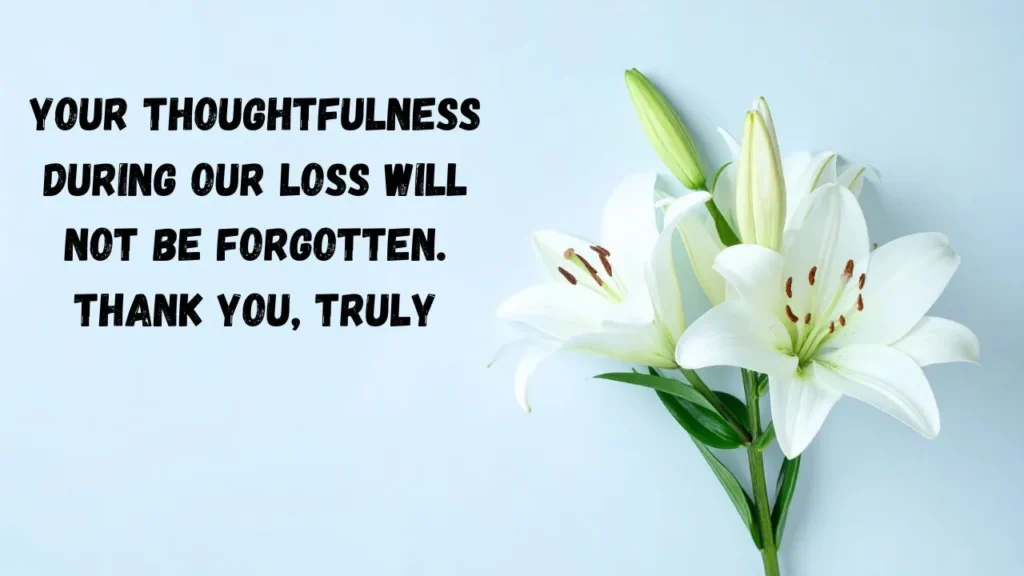
“Your thoughtfulness during our loss will not be forgotten. Thank you, truly.”
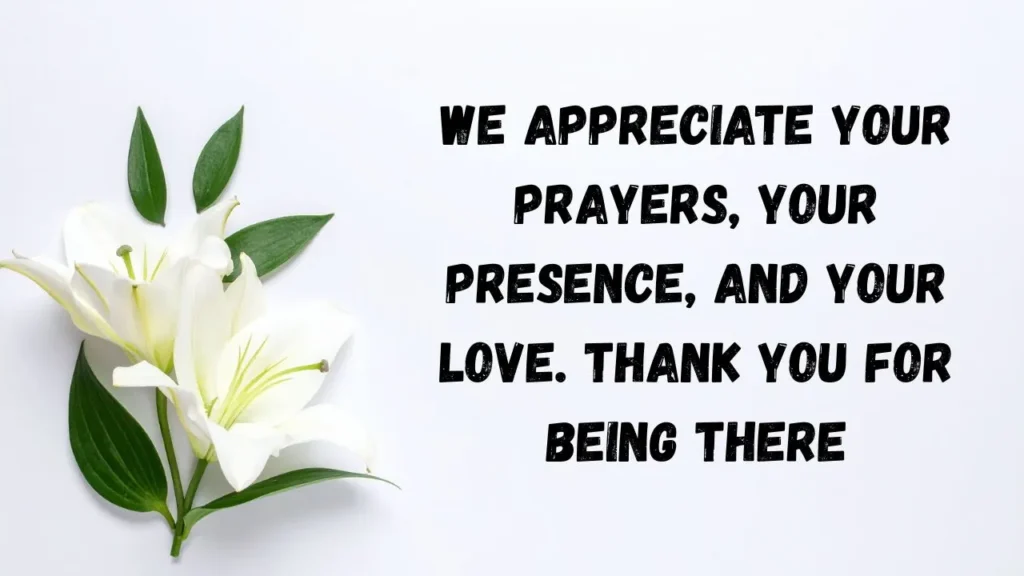
“We appreciate your prayers, your presence, and your love. Thank you for being there.”
“Thank you for your condolences. Your warm words brought comfort to our whole family.”
“Your support during this time has been a true blessing. We are so grateful for you.”
“Thank you for being such a wonderful source of strength and comfort. We are deeply grateful.”
“Your compassion during our grief has touched our hearts. Thank you for your kindness.”
How to Write a Heartfelt Gratitude Message During Grief
Writing through grief is hard. Your mind is foggy. Words feel insufficient. But the act of writing itself is part of healing through grief. Here is how to do it without pressure.
How to Thank Someone Who Provided Emotional Support
How do you thank someone for emotional support? Be direct. Be specific. Be human.
Tell them what they did. “You called me every night for a week” is more meaningful than a vague “you were always there.” Acknowledge how it landed emotionally. And remind them their effort was not invisible — you saw it, you felt it, and it helped.
Grief therapists consistently note that naming specific acts of kindness in a bereavement thank you note deepens the emotional connection between giver and receiver. It validates the supporter’s effort and helps both parties process the loss together.
How to Personalize a Thank You Note So It Feels Genuine, Not Generic
What makes a thank you note feel personal? Three things:
Use the recipient’s name. Mention your loved one by name. Reference the specific thing they did.
Avoid copy-paste energy. Even using a template, change at least two lines to reflect your real relationship. Add a memory, an inside detail, or a word that only they would understand.
Bereavement counselors at hospice organizations across the U.S. recommend treating each note as a mini letter — not a form. The extra two minutes it takes to add one personal line makes all the difference.
What NOT to Say in a Sympathy Thank You Note
Knowing what to avoid is just as important as knowing what to write.
Avoid these common mistakes in sympathy thank you notes:
Do not say “I’m fine” or “we’re doing okay” if you’re not. It creates emotional distance and makes the note feel dishonest.
Do not apologize for sending the note late. A brief, genuine note sent weeks after the funeral is still deeply appreciated. Most people understand.
Do not make the note about your grief details. This is a thank you, not a grief update. Keep the focus on the person you are thanking.
Do not use hollow phrases like “your support was nice.” Use specific, emotionally honest language instead.
When and How to Send Your Sympathy Thank You Notes
There is no single “right way” to send bereavement thank you cards. But there are guidelines that make the process easier and more meaningful.
How Long After a Funeral Should You Send Thank You Cards?
How long after a funeral should you send thank you cards? Traditional etiquette suggests within two to four weeks after the memorial service.
However, grief does not follow a schedule. According to the National Funeral Directors Association (NFDA), most people understand that sending notes takes time. A sincere note sent six weeks after the service carries just as much meaning as one sent the next day.
If writing feels overwhelming, start with the people who gave the most — a close friend, a sibling who traveled far, the colleague who organized the office collection. Work outward from there.
Handwritten Note vs. Digital Message — Which Is More Appropriate?
Is a handwritten thank you note better than a digital message? In most cases, yes — but context matters.
A handwritten sympathy thank you card is the gold standard. It shows effort, intention, and care. It is something the recipient may keep for years.
That said, a heartfelt email or even a thoughtful text message is far better than silence. If you are overwhelmed, starting with a digital message and following up with a handwritten card later is a completely acceptable approach.
The Emily Post Institute, one of America’s leading authorities on etiquette, affirms that sincerity always outweighs format.
Tips for Writing Thank You Notes When You’re Overwhelmed by Grief
What if grief makes it impossible to write? Here are practical steps that actually help:
Write in small batches — three to five notes per sitting, not all at once.
Use a simple template and change just two or three lines for each person.
Ask a trusted family member to help address envelopes or keep a list of who still needs a note.
Give yourself permission to be brief. A two-sentence note is still a thank you note.
Write at a time of day when your energy is slightly better — for many grieving people, that is mid-morning.
Grief researchers note that the act of writing thank you notes can itself be therapeutic — it brings forward positive memories of the support received and gently shifts focus from loss to connection.
FAQs
How Do You Say Thank You for Sympathy Messages?
Say thank you for sympathy messages by being specific, personal, and brief. Mention what the person did, tell them how it made you feel, and close with warmth. You do not need perfect words — just honest ones. Phrases like “your kindness gave me strength,” “your presence meant everything,” or “I am so grateful you reached out” all work beautifully.
How to Write a Thank You Note After a Bereavement?
To write a thank you note after a bereavement: Start with the person’s name. Reference the specific thing they did — flowers, food, a phone call, a donation. Say how it helped or comforted you. Mention your loved one if appropriate. Sign off with genuine warmth. Keep it to three to five sentences. Send it within two to four weeks, but know that a late note is still always appreciated.
How Do You Write a Heartfelt Gratitude Message?
A heartfelt gratitude message is specific, emotionally honest, and personal. Avoid generic phrases. Use the person’s name. Reference what they did and how it affected you. Speak from your actual emotional experience. A message that says “when you brought dinner on Tuesday, I finally felt something other than numb” is infinitely more powerful than “thank you for your support.”
How to Thank Someone Who Provided Emotional Support?
To thank someone for emotional support, acknowledge the invisible work they did. Emotional support is often quiet — a phone call, a listening ear, a check-in text. Name it explicitly. Say “thank you for calling me every day” or “thank you for sitting with me without needing to fix anything.” Let them know their presence made a measurable difference in your ability to cope. That kind of acknowledgment is rare and deeply meaningful.
Conclusion
Grief is exhausting. Writing can feel impossible. But sending a heartfelt thank you message for sympathy and support is one of the most healing things you can do — for the person you are thanking, and for yourself.
You do not need to be eloquent. You do not need to be okay. You just need to be real.
Use the messages above as a starting point. Change a line or two to make it yours. Write when you are ready — not when etiquette says you should.
The people who showed up for you during the hardest time of your life deserve to know it mattered. And you deserve the quiet peace that comes from saying so.
Your words, however imperfect, are enough.

I am a professional content writer with over five years of experience creating high-quality, engaging, and SEO-optimized content. I specialize in blog posts, website content, and persuasive copy that helps brands grow their online presence. My focus is on delivering clear, compelling, and value-driven content tailored to each client’s goals.