Losing someone hurts in any language. But when the grieving person speaks Spanish, finding the right words feels even harder.
This guide gives you 100+ condolence messages in Spanish — ready to use for sympathy cards, flower tags, WhatsApp texts, and handwritten notes. Every message comes with an English translation so you always know exactly what you are saying.
Why Sending Condolences in Spanish Matters
Choosing the right Spanish sympathy message is more than a translation task. It is an act of cultural respect.
Over 62 million people in the United States speak Spanish at home. Many of them rely on WhatsApp as their primary way to communicate — including during moments of loss. Sending a message in Spanish tells a grieving family that you truly see them, not just as a contact in your phone, but as a person deserving of genuine consuelo (comfort).
One of the first decisions to make is tú vs. usted. This is not just grammar. It is an emotional signal. If you want to read Condolence Flower Messages then visit this site.
Tú is informal. Use it with close friends, younger relatives, or people you already address on a first-name basis. It communicates warmth and closeness.
Usted is formal. Use it with elders, distant acquaintances, colleagues, or anyone you are not sure about. When in doubt, usted is always the safer and more respectful choice in Hispanic culture during solemn occasions.
Also worth knowing: pésame, condolencias, and lo siento are not identical.
Mi más sentido pésame is the most traditional and formal phrase — used at funerals, in cards, and in formal written messages. If you want to read Condolence Card Messages then visit this site.
Mis condolencias carries the same weight and is slightly more modern.
Lo siento or lo siento mucho is warmer and more personal — perfect for texts, WhatsApp, and close relationships.
According to research on grief communication, receiving a personalized condolence message significantly reduces feelings of isolation in bereaved individuals. When that message also honors a person’s language and culture, the comfort it delivers is even deeper.
Condolence Messages in Spanish for Sympathy Cards
A sympathy card in Spanish deserves more than a one-line translation. The card sits on a table for days, sometimes weeks. The family reads it more than once.
These messages are crafted to feel heartfelt, dignified, and sincere — not machine-translated. Choose based on your relationship and the tone you want to set.
Short condolence messages in Spanish for cards:
“Mi más sentido pésame para ti y tu familia. Que encuentren paz en medio del dolor. (My deepest condolences to you and your family. May you find peace amid the pain.)”
“Lamento profundamente tu pérdida. Estoy aquí para lo que necesites. (I deeply regret your loss. I am here for whatever you need.)”
“No hay palabras que alivien este dolor, pero sí hay un corazón que los acompaña hoy. (There are no words to ease this pain, but there is a heart that accompanies you today.)”
“Te envío todo mi amor en este momento tan difícil. Mucha fuerza. (I send you all my love in this difficult moment. Much strength.)”
“Que el recuerdo de su vida sea siempre tu mayor consuelo. (May the memory of their life always be your greatest comfort.)”
“Con profundo respeto y cariño, te acompaño en este momento de dolor. (With deep respect and affection, I accompany you in this moment of grief.)”
“El dolor que sientes hoy es tan grande como el amor que compartieron. (The pain you feel today is as great as the love you shared.)”
“Que Dios llene tu corazón de paz y fortaleza en estos días tan duros. (May God fill your heart with peace and strength in these hard days.)”
“Guardo en mi corazón el recuerdo de quien tanto quisiste. (I hold in my heart the memory of the one you loved so dearly.)”
“Recibe mi más sincero pésame. Su partida deja un vacío que no se puede llenar con palabras. (Accept my most sincere condolences. Their departure leaves a void that words cannot fill.)”
Sympathy card messages in Spanish for loss of a mother:
“La partida de tu madre deja una huella imborrable. Fue una mujer extraordinaria, y su amor vivirá siempre en ti. (Your mother’s passing leaves an unforgettable mark. She was an extraordinary woman, and her love will always live in you.)”
“Perder a una madre es perder el primer hogar que conocimos. Te acompaño con todo mi corazón. (Losing a mother is losing the first home we ever knew. I accompany you with all my heart.)”
“Tu mamá dejó este mundo, pero el amor que te dio no tiene fin. Mis más sentidas condolencias. (Your mom left this world, but the love she gave you has no end. My deepest condolences.)”
Sympathy card messages in Spanish for loss of a father:
“La muerte de un padre nos deja sin brújula por un tiempo. Pero sus enseñanzas siempre te guiarán. Mi pésame sincero. (The death of a father leaves us without a compass for a while. But his teachings will always guide you. My sincere condolences.)”
“Tu padre fue un hombre que dejó su huella en todos los que lo conocieron. Que su memoria sea siempre tu fortaleza. (Your father was a man who left his mark on everyone who knew him. May his memory always be your strength.)”
“Hoy lloro contigo la partida de tu padre. Su legado vive en cada parte de quien eres tú. (Today I mourn with you the passing of your father. His legacy lives in every part of who you are.)”
Professional sympathy card messages in Spanish for coworkers:
“En nombre de todo el equipo, le expresamos nuestras más sentidas condolencias por tan sensible pérdida. (On behalf of the entire team, we express our deepest condolences for such a profound loss.)”
“Le acompañamos en el sentimiento. Sepa que cuenta con nuestro apoyo incondicional en estos momentos difíciles. (We accompany you in your grief. Please know you have our unconditional support in these difficult moments.)”
“Reciba nuestro más sentido pésame. Nos unimos a su dolor con profundo respeto y solidaridad. (Please accept our deepest condolences. We join you in your grief with deep respect and solidarity.)”
Sympathy card messages in Spanish for loss of a friend:
“Perder a un amigo es perder una parte de ti mismo. Lloro contigo y estoy aquí para lo que necesites. (Losing a friend is losing a part of yourself. I cry with you and I am here for whatever you need.)”
“Tu amigo/a fue una luz en la vida de todos los que lo/la conocieron. Esa luz no se apaga. (Your friend was a light in the lives of all who knew them. That light does not go out.)”
Condolence Messages in Spanish for Flowers and Flower Cards
Flower tags are small but powerful. A few sincere words on a floral tribute can mean everything to a grieving family. These are short Spanish phrases for flower cards — brief, beautiful, and meaningful.
This is something most guides skip entirely. But in reality, what you write on a flower card is often the first thing a family reads when the arrangement arrives.
“Con todo mi amor y mis condolencias. (With all my love and condolences.)”
“Descanse en paz. Lo/La recordaremos siempre con amor. (Rest in peace. We will always remember them with love.)”
“Estas flores llevan todo el cariño que las palabras no pueden expresar. (These flowers carry all the affection that words cannot express.)”
“Un abrazo de flores para un corazón que duele. (A hug of flowers for a heart that hurts.)”
“En memoria de quien tanto quisimos. Siempre en nuestros corazones. (In memory of the one we loved so dearly. Always in our hearts.)”
“Con profundo pesar y amor. Que descanse en la paz eterna. (With deep sorrow and love. May they rest in eternal peace.)”
“Tu ausencia duele, pero tu recuerdo florece. (Your absence hurts, but your memory blooms.)”
“Que estas flores sean un pequeño reflejo del amor inmenso que te tenemos. (May these flowers be a small reflection of the immense love we have for you.)”
“Para la familia, con todo nuestro respeto y cariño en este momento de dolor. (For the family, with all our respect and affection in this moment of grief.)”
“Vuela alto. Tu luz ilumina desde el cielo. (Fly high. Your light shines from above.)”
“Con el corazón roto pero lleno de gratitud por haber conocido a tan bella persona. (With a broken heart but full of gratitude for having known such a beautiful person.)”
“Siempre serás recordado/a con una sonrisa en el corazón. (You will always be remembered with a smile in our hearts.)”
“Estas flores son un abrazo que no pudimos darte en persona. (These flowers are a hug we could not give you in person.)”
“Para quien fue y siempre será: inolvidable. (For the one who was and always will be: unforgettable.)”
“Con amor eterno, hoy y siempre. (With eternal love, today and always.)”
100+ Condolence Messages in Spanish Organized by Situation and Relationship
This is the core of this guide. Below you will find condolences in Spanish organized by who you lost, what medium you are using, and what tone fits best. Every message is written to feel genuine, not generic.
Loss of a mother — Mensajes por la pérdida de una madre:
“El mundo se siente diferente sin tu mamá en él. Pero el amor que ella te dio vive en cada parte de ti. Mi pésame más sincero. (The world feels different without your mom in it. But the love she gave you lives in every part of you. My most sincere condolences.)”
“Una madre nunca desaparece del todo — vive en los valores que nos enseñó, en los gestos que heredamos, en el amor que seguimos dando. Te acompaño en tu dolor. (A mother never truly disappears — she lives in the values she taught us, the gestures we inherited, the love we keep giving. I accompany you in your grief.)”
“Que los recuerdos hermosos de tu madre sean la luz que ilumina los días oscuros que vienen. (May the beautiful memories of your mother be the light that illuminates the dark days ahead.)”
“Siento mucho la pérdida de tu mamá. Era una persona especial y todos la extrañaremos muchísimo. (I am so sorry for the loss of your mom. She was a special person and we will all miss her deeply.)”
“Tu madre fue la raíz de tu árbol. Aunque ya no esté, el árbol sigue en pie — fuerte, hermoso, y lleno de vida. (Your mother was the root of your tree. Though she is gone, the tree still stands — strong, beautiful, and full of life.)”
Loss of a father — Mensajes por la pérdida de un padre:
“Hoy el mundo pierde a un gran hombre. Tu familia pierde a su pilar. Y yo pierdo a alguien que siempre admiré. Mis condolencias más profundas. (Today the world loses a great man. Your family loses its pillar. And I lose someone I always admired. My deepest condolences.)”
“Los padres son los primeros héroes que tenemos. El tuyo fue uno de los mejores. Que descanse en paz. (Fathers are the first heroes we have. Yours was one of the best. May he rest in peace.)”
“Siento profundamente la partida de tu papá. Su fuerza y su bondad siguen vivos en ti. (I deeply feel the passing of your dad. His strength and kindness live on in you.)”
“Un padre como el tuyo deja un legado que ninguna muerte puede borrar. Mis sentidas condolencias. (A father like yours leaves a legacy that no death can erase. My heartfelt condolences.)”
“Que el recuerdo de su risa, sus consejos y su amor sean siempre tu mayor fortaleza. (May the memory of his laughter, his advice, and his love always be your greatest strength.)”
Loss of a husband or wife — Mensajes por la pérdida de un esposo o esposa:
“Perder al compañero/a de tu vida es perder la mitad de tu corazón. No tengo palabras suficientes, pero sí tengo todo mi apoyo para ti. (Losing your life partner is losing half of your heart. I do not have enough words, but I do have all my support for you.)”
“El amor que compartieron fue real, profundo y eterno. Nadie puede quitarte eso. Mis más sentidas condolencias. (The love you shared was real, deep, and eternal. No one can take that from you. My deepest condolences.)”
“Siento mucho la pérdida de tu esposo/a. Fue una persona que tocó muchos corazones, especialmente el tuyo. (I am so sorry for the loss of your husband/wife. They were a person who touched many hearts, especially yours.)”
“Hoy acompaño tu dolor en silencio, sabiendo que no hay nada que pueda llenar ese vacío. Pero aquí estoy. (Today I accompany your pain in silence, knowing nothing can fill that void. But I am here.)”
“Que los años de amor que vivieron juntos sean siempre tu refugio en los momentos de tristeza. (May the years of love you lived together always be your refuge in moments of sadness.)”
Loss of a child — Mensajes por la pérdida de un hijo o hija:
“No existe dolor más grande que el de un padre o una madre que pierde un hijo. Te abrazo con todo mi corazón. (There is no greater pain than that of a parent who loses a child. I embrace you with all my heart.)”
“Tu hijo/a fue una luz demasiado brillante para este mundo. Ahora ilumina desde el cielo. Mis más profundas condolencias. (Your son/daughter was a light too bright for this world. Now they shine from above. My deepest condolences.)”
“Las palabras se quedan cortas ante una pérdida como esta. Solo quiero que sepas que estoy aquí, siempre. (Words fall short in the face of a loss like this. I just want you to know I am here, always.)”
“Que el amor que le diste en vida sea hoy y siempre tu mayor consuelo. Lamento profundamente tu pérdida. (May the love you gave them in life be today and always your greatest comfort. I deeply regret your loss.)”
Short condolence messages in Spanish for text or WhatsApp:
These are ideal when you need something brief, warm, and immediate. In many Spanish-speaking households, WhatsApp is how news travels — and how comfort arrives first.
“Lo siento mucho. Aquí estoy para lo que necesites. Un abrazo enorme. (I am so sorry. I am here for whatever you need. A huge hug.)”
“Mi pésame para ti y tu familia. Mucha fuerza en este momento tan duro. (My condolences to you and your family. Much strength in this hard moment.)”
“Acabo de enterarme y mi corazón está con ustedes. Lo siento muchísimo. (I just found out and my heart is with you. I am so very sorry.)”
“No tengo palabras. Solo amor y un abrazo fuerte para ti. (I have no words. Just love and a strong hug for you.)”
“Te acompaño en el sentimiento. Estoy aquí cuando me necesites. (I am with you in your grief. I am here when you need me.)”
“Siento mucho tu pérdida. Cuenta conmigo para lo que sea, a cualquier hora. (I am so sorry for your loss. Count on me for anything, at any hour.)”
“Todo mi cariño para ti hoy. No estás solo/a en esto. (All my affection for you today. You are not alone in this.)”
“Lamento mucho lo que estás pasando. Mándame un mensaje cuando quieras hablar. (I am so sorry for what you are going through. Send me a message whenever you want to talk.)”
“Un abrazo enorme desde aquí. Lo siento de verdad. (A huge hug from here. I am truly sorry.)”
“Qué triste noticia. Mi corazón está contigo y con toda tu familia. (What sad news. My heart is with you and your entire family.)”
Religious and faith-based condolence messages in Spanish — Mensajes de Fe:
For many Hispanic and Latin American families, faith is the foundation of comfort during grief. According to Pew Research, over 77% of Latin Americans identify as Christian. These messages reflect that deeply held spiritual framework.
“Que Dios lo/la tenga en su santa gloria y que su alma descanse en la paz eterna. (May God keep them in his holy glory and may their soul rest in eternal peace.)”
“El Señor da y el Señor quita. Que Dios les dé fortaleza y consuelo en este momento de dolor. (The Lord gives and the Lord takes. May God give you strength and comfort in this moment of pain.)”
“Que los ángeles le reciban con los brazos abiertos y que Dios llene tu corazón de paz. (May the angels receive them with open arms and may God fill your heart with peace.)”
“La fe nos dice que la muerte no es el final, sino el comienzo de algo eterno. Que esa esperanza te sostenga hoy. (Faith tells us that death is not the end, but the beginning of something eternal. May that hope sustain you today.)”
“Dios tiene un plan que no siempre entendemos, pero en Él está la paz que sobrepasa todo entendimiento. Mis condolencias. (God has a plan we do not always understand, but in Him is the peace that surpasses all understanding. My condolences.)”
“Que el Señor sea tu fortaleza hoy y siempre, y que la luz perpetua brille sobre quien tanto quisiste. (May the Lord be your strength today and always, and may perpetual light shine upon the one you loved so dearly.)”
“Dios no nos abandonó en el momento más oscuro. Él está contigo ahora, sosteniéndote. (God did not abandon us in the darkest moment. He is with you now, holding you up.)”
“Con la esperanza de la resurrección y la certeza del amor de Dios, te envío mis más sentidas condolencias. (With the hope of resurrection and the certainty of God’s love, I send you my deepest condolences.)”
“Que encuentres en la oración el alivio que las palabras humanas no pueden darte. Estoy contigo. (May you find in prayer the relief that human words cannot give you. I am with you.)”
Secular condolence messages in Spanish — without religious references:
Not every family holds religious beliefs. These messages offer comfort through love, legacy, and memory — powerful and appropriate for anyone.
“El amor que vivieron juntos no tiene fecha de vencimiento. Eso nadie puede quitártelo. (The love you lived together has no expiration date. No one can take that from you.)”
“Las personas que amamos no desaparecen — viven en cada recuerdo, en cada historia que contamos, en cada sonrisa que heredamos. (The people we love do not disappear — they live in every memory, every story we tell, every smile we inherit.)”
“Recordar es la forma más hermosa de mantener viva a una persona. Y tú lo harás, eso lo sé. (Remembering is the most beautiful way to keep a person alive. And you will, I know that.)”
“Vivir es dejar huella. Y la suya quedó marcada para siempre en las personas que tuvo cerca. (To live is to leave a mark. And theirs was marked forever in the people they held close.)”
“No hay que creer en el más allá para saber que el amor de alguien sigue aquí, todos los días. (You do not have to believe in the afterlife to know that someone’s love is still here, every day.)”
“El dolor que sientes hoy es el precio del amor que tuviste. Y ese amor valió cada segundo. (The pain you feel today is the price of the love you had. And that love was worth every second.)”
“Que los momentos felices que compartieron sean siempre más fuertes que el dolor de su ausencia. (May the happy moments you shared always be stronger than the pain of their absence.)”
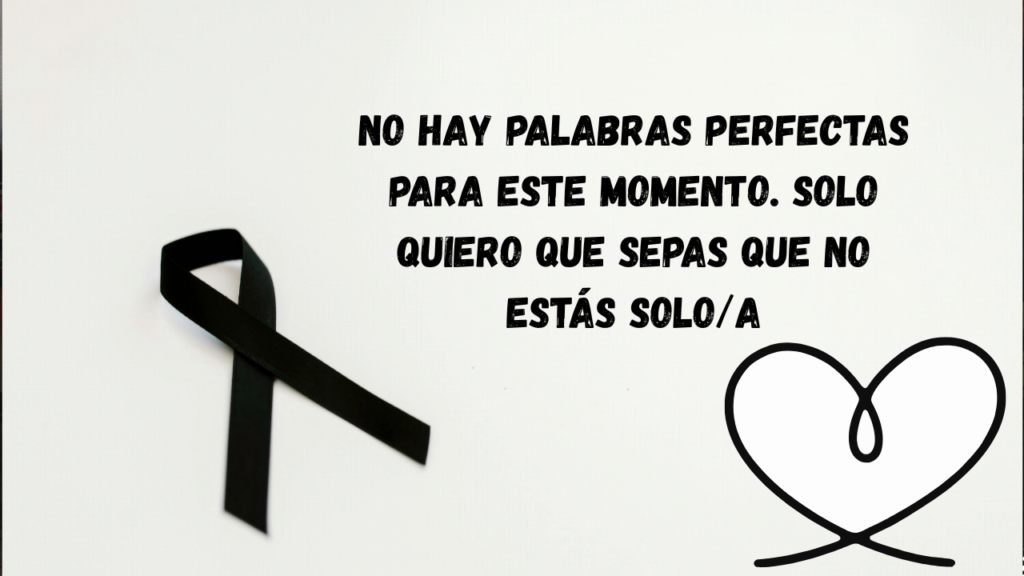
“No hay palabras perfectas para este momento. Solo quiero que sepas que no estás solo/a. (There are no perfect words for this moment. I just want you to know you are not alone.)”
Follow-up condolence messages in Spanish — checking in weeks later:
Most people stop reaching out after the funeral. But grief does not stop after the funeral. Sending a message weeks or even months later is one of the most powerful things you can do. Studies show that bereaved individuals often feel most isolated 4–6 weeks after a loss, once the initial support fades.
“Han pasado algunas semanas y quería que supieras que sigo pensando en ti. ¿Cómo estás llevando todo? (A few weeks have passed and I wanted you to know I am still thinking of you. How are you handling everything?)”
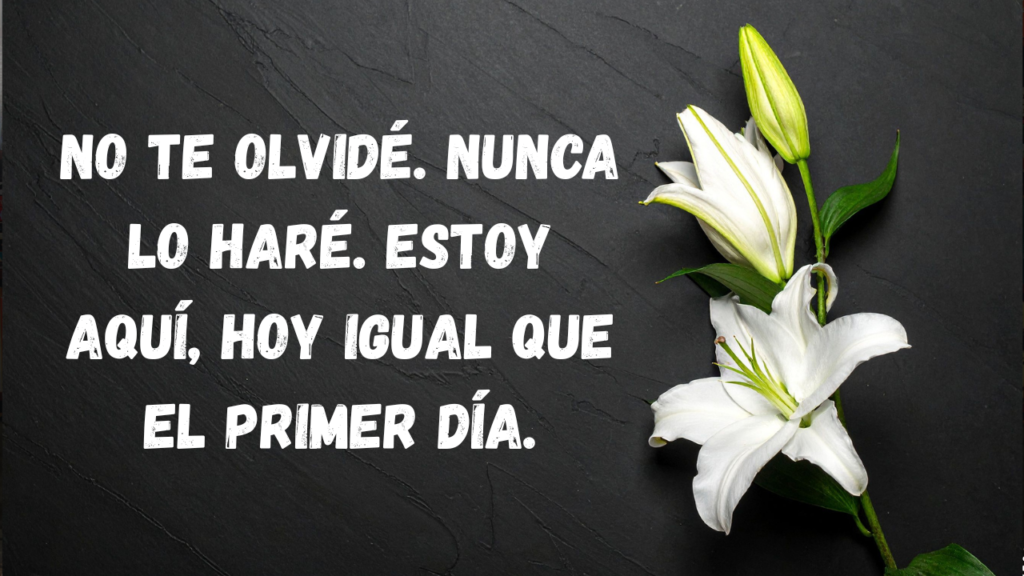
“No te olvidé. Nunca lo haré. Estoy aquí, hoy igual que el primer día. (I did not forget you. I never will. I am here, today just like the first day.)”
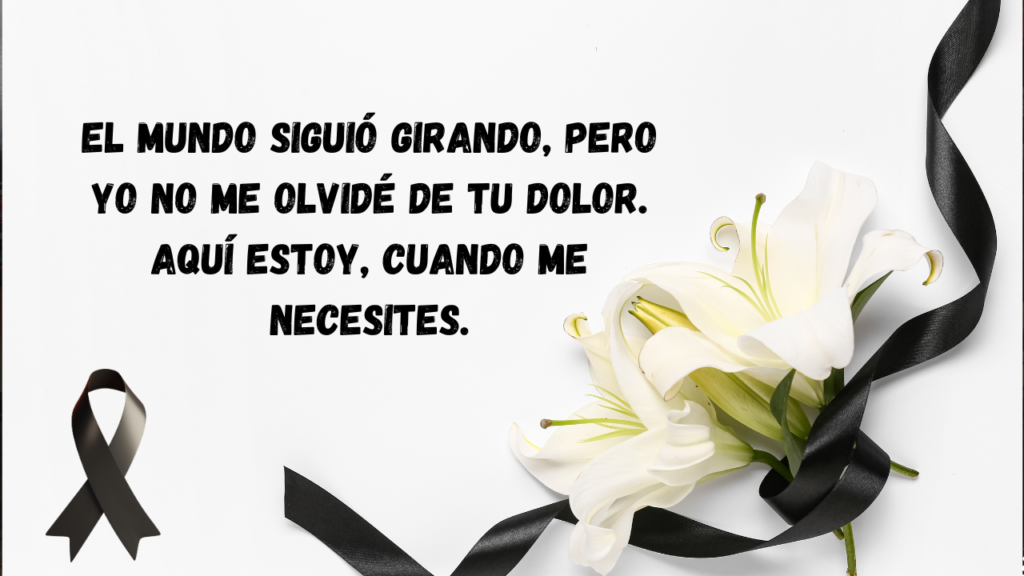
“El mundo siguió girando, pero yo no me olvidé de tu dolor. Aquí estoy, cuando me necesites. (The world kept turning, but I did not forget your pain. I am here when you need me.)”
“Solo quería mandarte un mensaje para decirte que pienso en ti y que el recuerdo de tu ser querido vive también en mí. (I just wanted to send you a message to say I am thinking of you and that the memory of your loved one lives in me too.)”
“Un mes después y tu pérdida sigue presente. Cuídate mucho, y recuerda que siempre puedes contar conmigo. (A month later and your loss is still present. Take good care of yourself, and remember you can always count on me.)”
“Sé que los días siguen siendo difíciles. No tienes que estar bien todavía. Solo quiero que sepas que estoy aquí. (I know the days are still difficult. You do not have to be okay yet. I just want you to know I am here.)”
“Los que amamos no se van del todo mientras los recordamos. Y yo los recuerdo junto contigo. (Those we love do not fully leave as long as we remember them. And I remember them alongside you.)”
“Hoy pensé en ti y en todo lo que has cargado. Eres más fuerte de lo que crees. Aquí estoy. (Today I thought of you and everything you have been carrying. You are stronger than you know. I am here.)”
What NOT to Say — Common Mistakes When Expressing Condolences in Spanish
Knowing what not to say is just as important as knowing the right phrases. Some well-intentioned expressions can feel dismissive, awkward, or culturally tone-deaf.
Avoid these common mistakes:
“Ya está en un lugar mejor” (They are in a better place) — This assumes the family shares your spiritual beliefs. Unless you know for certain they are religious, avoid it. It can accidentally minimize the grief.
“Te entiendo perfectamente” (I understand you perfectly) — Unless you have experienced the exact same loss, this phrase can feel invalidating. Every grief is unique. Instead, use “Te acompaño en el sentimiento” (I accompany you in your grief).
“Tienes que ser fuerte” (You have to be strong) — This puts pressure on a grieving person to suppress their emotions. Grief needs space, not a deadline. Replace it with “Aquí estoy para darte la fuerza que necesitas” (I am here to give you the strength you need).
“Al menos tuvo una vida larga” (At least they lived a long life) — The word “al menos” (at least) minimizes the loss. There is no “at least” in grief. Every loss is complete.
“Llámame si necesitas algo” (Call me if you need anything) — This puts the burden on the grieving person. Instead, be specific: “¿Puedo traerte algo de comer mañana?” (Can I bring you something to eat tomorrow?)
Signing off your sympathy note correctly matters too. For close relationships, close with “Con todo mi cariño” (With all my affection) or “Un abrazo fuerte” (A strong hug). For formal or professional messages, use “Con profundo respeto” (With deep respect) or “Atentamente” (Sincerely).
One cultural note for the USA context: Many bicultural Hispanic families in the United States blend English and Spanish naturally. It is perfectly acceptable — and often very touching — to write a card that includes a line or two in Spanish even if the rest is in English. The gesture itself communicates respect.
FAQs
What is the most comforting condolence message?
The most comforting condolence message is one that acknowledges the pain without trying to fix it. In Spanish, the phrase “Te acompaño en el sentimiento” (I accompany you in your grief) is widely considered the most emotionally resonant because it communicates presence rather than solutions. A close second is “Mi más sentido pésame” — traditional, respectful, and universally understood across all Spanish-speaking cultures.
When someone passes away, what quotes in Spanish can I share?
When someone passes away, the most meaningful quotes in Spanish to share focus on love, memory, and legacy. Phrases like “Mientras se le recuerde con amor, nunca habrá muerto del todo” (As long as they are remembered with love, they will never have truly died) and “El amor nunca deja de ser” (Love never ceases to be) offer profound comfort. For social media or a card, something shorter like “Vuela alto. Siempre en nuestros corazones” (Fly high. Always in our hearts) works beautifully.
What are some comforting words to say in Spanish?
Some of the most comforting words in Spanish for a grieving person include: consuelo (comfort/solace), fuerza (strength), paz (peace), amor (love), and recuerdos (memories). In a sentence, saying “Mucha fuerza y mucho amor para ti y tu familia” (Much strength and much love for you and your family) covers all the emotional bases in a warm, natural way. You can also say “Puedes contar conmigo para lo que necesites” (You can count on me for whatever you need) to show active support.
What to say to someone who lost a loved one over text in Spanish?
Over text or WhatsApp, keep it short, warm, and immediate. The best approach is to acknowledge the loss, express your sorrow, and offer your presence. A simple “Lo siento muchísimo. Aquí estoy para ti, a cualquier hora” (I am so very sorry. I am here for you, at any hour) is perfect. You can also add “Un abrazo enorme” (A huge hug) to close. Avoid sending long paragraphs over text — in Spanish communication culture, brevity in a text feels more genuine and less performative.
Conclusion
Expressing condolences in Spanish is one of the most meaningful things you can do for a grieving friend, family member, or colleague. It goes beyond language — it is a bridge of respect, love, and cultural understanding.
Whether you are writing on a sympathy card, attaching a note to flowers, or sending a WhatsApp message at midnight because the news just hit you, the right words exist. You found them here.
Use them freely. Send them with love. And remember — the most important thing is not the perfect phrase. It is the fact that you showed up, in their language, in their moment of loss.
That is consuelo. And it matters more than you know.

I am a professional content writer with over five years of experience creating high-quality, engaging, and SEO-optimized content. I specialize in blog posts, website content, and persuasive copy that helps brands grow their online presence. My focus is on delivering clear, compelling, and value-driven content tailored to each client’s goals.